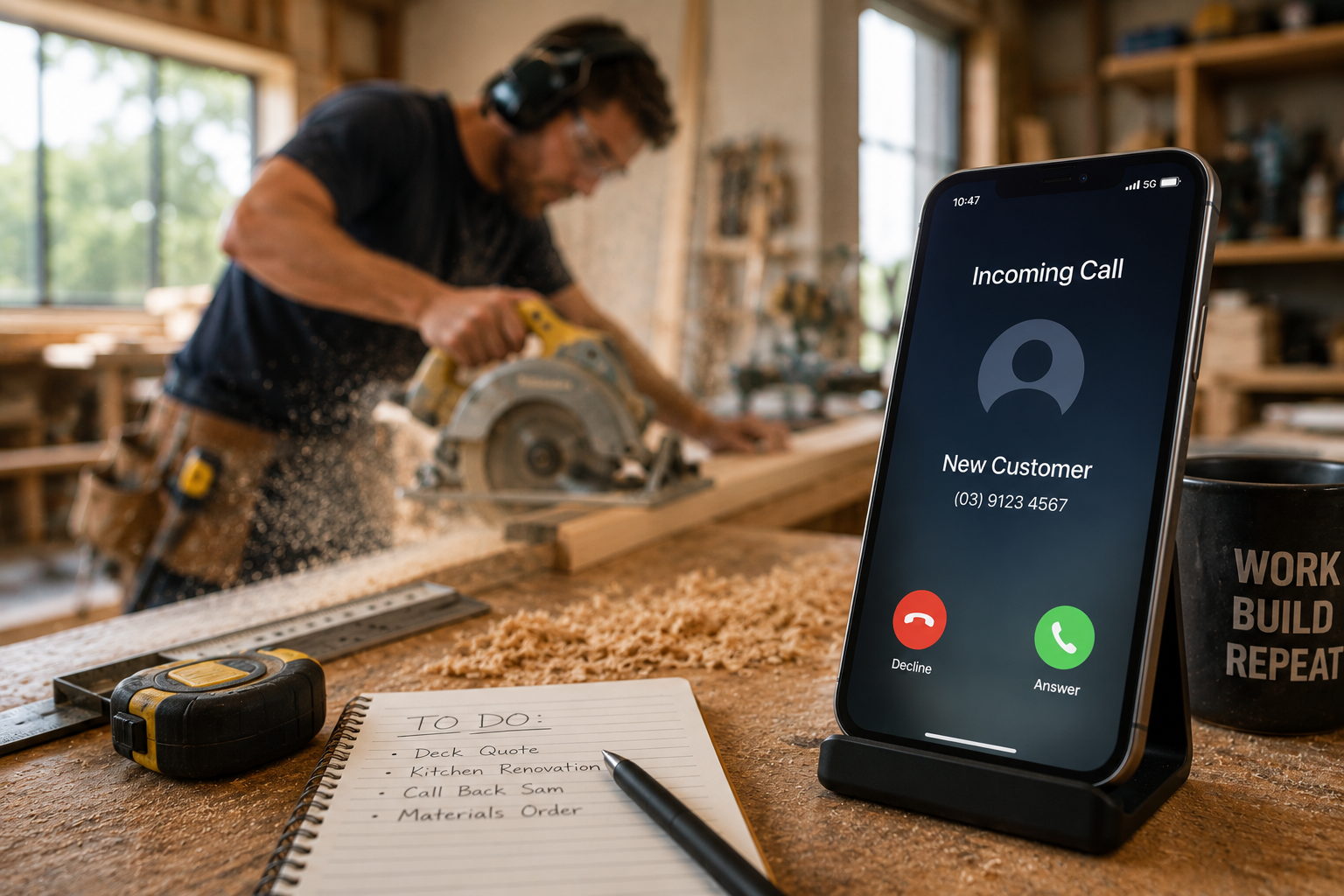
Running a plumbing business means dealing with the unexpected.
A customer wakes up to a leaking pipe. A restaurant discovers a blocked drain during its busiest hours. A homeowner suddenly has no hot water. Someone calls about a minor repair while another customer has water flooding through their ceiling.
Every call is different, but they all have one thing in common: the customer wants help quickly.
For plumbing businesses, responding to those calls isn't always easy. Technicians are constantly moving between jobs, office teams are coordinating schedules, emergency calls can arrive at any moment, and a single delay can throw off the entire day.
Traditionally, keeping everything organised requires someone in the office to answer calls, understand the problem, check which plumber is available, consider where each technician is located, assign the job, update the schedule, and keep the customer informed.
That's a lot of moving parts.
AI automation is beginning to change how this process works. Instead of relying entirely on manual coordination, plumbing businesses can use intelligent systems to help capture incoming jobs, organise customer information, prioritise requests, and move each job toward the right technician.
The result is a simpler approach to one of the most complicated parts of running a plumbing company: dispatching.
The Dispatching Problem
Dispatching sounds simple until you're actually doing it.
A new job comes in. You find an available plumber. You send them to the customer.
But in reality, the dispatcher has to think about much more.
Where is the technician right now? How long will their current job take? What skills does the next job require? Is the customer dealing with an emergency? How far will the technician need to drive? Is another technician closer? What happens if the current job runs longer than expected?
Modern plumbing dispatch software from ServiceTitan demonstrates how digital dispatch systems are already helping plumbing companies manage these variables. Features such as skills-based scheduling, capacity planning, real-time updates, and technician information give dispatchers more visibility into what's happening across the business.
But the next step goes beyond simply putting the dispatch board on a screen.
It's about using automation to help decide what should happen next.
From Incoming Call to Structured Job
Efficient dispatching starts before a technician is assigned.
It starts with the phone call.
When a customer calls a plumbing company, someone needs to understand what's happening before the business can decide who should handle the job.
"My tap is leaking" is very different from "A pipe burst and my kitchen is flooding."
An intelligent intake system can help identify that difference immediately.
Instead of simply collecting the customer's name and phone number, an AI-powered system can ask relevant questions about the problem, collect the service address, understand the urgency of the situation, and organise the information into a structured job request.
A routine tap repair might be scheduled for the next available appointment.
A blocked drain might require a technician with specific equipment.
A burst pipe could be marked as an urgent job that needs immediate attention.
By gathering better information at the beginning of the process, the business has more context to make better dispatching decisions.
Right Plumber. Right Job. Right Time.
One of the biggest challenges in plumbing dispatching is deciding which technician should receive which job.
The closest plumber isn't always the right plumber.
Different technicians may have different experience, equipment, certifications, or specialisations. A plumber who is perfect for a routine residential repair may not necessarily be the right person for a complicated commercial plumbing problem.
This is where intelligent scheduling and dispatch automation can become valuable.
Instead of relying entirely on a dispatcher to remember every technician's schedule, location, and skill set, software can help evaluate the available information and recommend—or automatically make—the most appropriate assignment.
For example, ServiceTitan's Dispatch Pro uses factors including technician skills, location, drive time, and performance information when making job assignment recommendations. This demonstrates the broader direction field service dispatching is heading: using operational data to help businesses make smarter assignment decisions.
For a plumbing business, the goal is straightforward.
Get the right plumber to the right customer without creating unnecessary delays.
When Emergency Calls Can't Wait
Plumbing businesses have another challenge that many other industries don't face: emergencies can happen at any time.
A burst pipe doesn't care whether it's 2 PM or 2 AM.
When an urgent customer reaches voicemail after normal business hours, the delay can be frustrating for the customer and potentially costly for the plumbing business.
AI-powered call handling and dispatch automation can help create a more responsive after-hours workflow.
Instead of every after-hours call becoming a voicemail that someone has to review later, an intelligent system can answer the initial enquiry, collect the customer's information, determine what they're calling about, and identify whether the situation appears urgent.
The job can then follow the appropriate workflow based on rules established by the plumbing business.
The industry is already moving toward connecting these systems. For example, ServiceTitan has introduced workflows that connect AI-powered voice intake with automated after-hours dispatching, allowing qualifying jobs created through its Voice Agent to move into technician dispatch based on configured business rules.
For customers dealing with urgent plumbing problems, that kind of speed matters.
For plumbing companies, it creates an opportunity to capture jobs that might otherwise go to the next company that answers the phone.
Less Time Coordinating. More Time Plumbing.
Manual dispatching creates a surprising amount of administrative work.
Every time a schedule changes, someone has to update it.
Every time a technician is delayed, someone may need to contact the next customer.
Every time an emergency job appears, someone has to decide where to fit it.
Every time a plumber finishes early, someone has to figure out where they should go next.
Individually, these decisions might only take a few minutes. Across dozens of jobs and multiple technicians, they quickly add up.
AI automation can help reduce that workload by handling more of the repetitive coordination behind the scenes.
The dispatcher doesn't disappear.
Their role becomes more focused.
Instead of manually managing every small scheduling decision, the team can focus on exceptions, emergencies, complex jobs, and situations where human judgement is genuinely valuable.
Modern field service platforms already provide dispatch boards that allow jobs to be extended, shortened, reassigned, or rescheduled as conditions change. As AI becomes more integrated into these systems, more of those decisions can be supported by real-time information and automated recommendations.
One Connected Plumbing Workflow
The real potential of AI automation appears when customer intake, booking, scheduling, and dispatching work together.
Imagine a customer calling because their water heater has stopped working.
The AI answers the call.
It collects the customer's contact details and service address.
It asks what happened.
It identifies the job as a water heater issue.
It gathers relevant information about the problem.
The job is created.
Available appointment times are checked.
The customer books a suitable time.
The system identifies which technicians have the appropriate skills and availability.
The job is assigned or prepared for dispatch.
The plumber receives the customer information and job details.
The customer receives confirmation.
Instead of information being manually copied from a voicemail into a calendar and then sent to a technician, the entire process becomes connected.
Call → Qualify → Book → Schedule → Dispatch.
This is where AI automation can have the greatest impact—not by replacing one individual task, but by reducing the friction between every step.
Smarter Routing Means Less Time on the Road
Dispatching isn't only about deciding who gets the job.
It's also about getting technicians there efficiently.
Sending a plumber across town when another qualified technician is already nearby creates unnecessary travel time. Multiply that across an entire fleet and those extra kilometres can turn into significant amounts of wasted time and fuel.
Modern field service dispatch platforms increasingly use technician location and route information to help businesses make more efficient scheduling decisions. ServiceTitan, for example, describes intelligent schedule optimisation and route planning as ways for dispatchers to respond to changing conditions and keep field teams moving efficiently.
For plumbing businesses, reducing unnecessary travel can create more room in the schedule.
Less time driving means more time available for actual jobs.
And completing more jobs without extending working hours can have a direct impact on the productivity of the entire team.
Keeping Customers in the Loop
Customers don't only care about when they can book a plumber.
They also want to know when that plumber will arrive.
Traditional appointment windows can be frustrating, especially when customers are waiting at home without knowing whether their technician is five minutes or two hours away.
Connected dispatch systems can improve communication by automatically sending appointment confirmations, reminders, and updates as the status of the job changes.
Some field service platforms also allow businesses to send technician information and arrival updates directly to customers.
This means fewer calls asking:
"Is the plumber still coming?"
"Where is the technician?"
"What time will they arrive?"
The customer stays informed while the office receives fewer routine status enquiries.
How Vocatus.ai Can Help Plumbing Businesses
This is where Vocatus.ai can help create a smarter front-office workflow for plumbing businesses.
For many plumbing companies, dispatching problems actually begin before the dispatch board.
They begin with the incoming call.
If the customer can't reach anyone, the business can't qualify the job.
If the job isn't qualified properly, the dispatcher doesn't have enough information.
If the dispatcher doesn't have enough information, it becomes harder to determine the appropriate next step.
Vocatus.ai helps address the beginning of this process by using AI to handle incoming customer conversations and collect the information needed to move an enquiry forward.
Imagine your plumbers are busy in the field when a customer calls about a blocked drain.
Instead of the call going unanswered, an AI-powered system can handle the initial conversation, collect the customer's details, understand the reason for the call, and gather relevant information about the job.
If another customer calls with an urgent burst pipe, the system can recognise that the enquiry requires a different workflow based on the rules your business has established.
The goal is to make sure that when a job reaches your team, you already have useful information about who the customer is, where they're located, what they need, and how the enquiry should be handled.
That creates a cleaner handoff between customer intake and dispatch.
Customer calls → AI answers → Job is qualified → Details are captured → Booking begins → Job is ready for dispatch.
By automating more of the repetitive work at the beginning of the customer journey, Vocatus.ai can help plumbing businesses reduce missed opportunities and give their teams better information to work with.
For smaller plumbing businesses, this can provide additional front-office capacity when everyone is busy on jobs.
For growing plumbing companies, it can help create a more consistent intake process as call volumes increase.
And for customers, it means getting an immediate response instead of wondering whether anyone received their voicemail.
The plumber still fixes the problem.
The dispatcher still manages the operation.
But AI can help remove the repetitive administrative work that happens between the customer's first call and the technician arriving at the door.
The Future of Plumbing Dispatch Is Connected
Plumbing dispatching will always involve unexpected situations.
Jobs will run late.
Traffic will happen.
Emergencies will appear.
Customers will reschedule.
Technicians will need to change routes.
AI won't eliminate those realities.
What it can do is help plumbing businesses respond to them faster.
By connecting AI-powered customer intake with smarter booking, scheduling, and dispatching workflows, plumbing companies can reduce manual coordination and create a more efficient path from incoming call to completed job.
The traditional workflow looked something like this:
Call. Take notes. Check the schedule. Find a plumber. Call the customer back. Assign the job. Send the details.
The smarter workflow is becoming:
Call. Qualify. Book. Schedule. Dispatch.
For plumbing businesses, that can mean fewer missed calls, better-organised jobs, faster response times, and less pressure on office staff.
For technicians, it means spending less time waiting for instructions and more time completing jobs.
And for customers, it means getting the right help when they need it.
That's what smarter plumbing dispatching should look like.